Project Description
MPH
SEATS
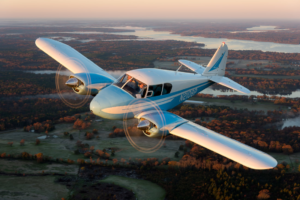
Piper PA-23 Apache
Role: Twin Engine Light Piston Utility
National Origin: United States
Manufacturer: Piper Aircraft
First Flight: 1954
Primary User: Civilian Owners
Number Built: 6976
The Piper PA-23, named Apache and later Aztec, is a four-to-six-seat twin-engined light aircraft aimed at the general aviation market. The United States Navy and military forces in other countries also used it in small numbers. Originally designed in the 1950s by the Stinson Aircraft Company, Piper Aircraft manufactured the Apache and a more powerful version, the Aztec, in the United States from the 1950s to the 1980s.
The PA-23 was the first twin-engined Piper aircraft, and was developed from a proposed “Twin Stinson” design, inherited when Piper bought the Stinson Division of the Consolidated Vultee Aircraft Corporation.The prototype PA-23 was a four-seat low-wing all-metal monoplane with a twin tail, powered by two 125 hp Lycoming O-290-D piston engines; it first flew on 2 March 1952.The aircraft performed badly and it was redesigned with a single vertical stabilizer and an all-metal rear fuselage and more powerful 150 hp Lycoming O-320-A engines.
Two new prototypes of the redesigned aircraft, now named Apache, were built in 1953 and entered production in 1954; 1,231 were built. In 1958 the Apache 160 was produced by upgrading the engines to 160 hp; 816 were built. The Apache 160 was superseded in 1962 by the Aztec-derived Apache 235.
General characteristics
- Crew: one
- Capacity: three passengers
- Payload: 1,600 lb
- Length: 31 ft 2 in
- Wingspan: 37 ft 2½ in
- Height: 10 ft 4 in
- Empty weight: 3,180 lb
- Max. takeoff weight: 5,200 lb
- Powerplant: 2 × Lycoming IO-320 normally aspirated air-cooled flat-four piston engines, 150 hp each
Performance
- Maximum speed: 170 mph
- Cruise speed: 150 mph
- Stall speed: 55 mph
- Range: 700 miles
- Service ceiling: 15,500 ft
- Rate of climb: 1,150 ft/min